
Restart a Heart – Gordon’s Story
Read about Gavin's Story.
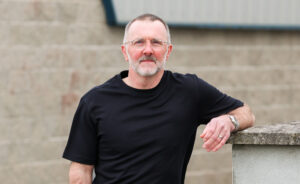
Read MoreWhen 48-year-old Gordon Flood arrived at his local gym in Trim, Co Meath, it seemed like any other training session. A keen runner, football coach and father of three, he had no warning that his heart was about to stop.
“There was no chest pain, no warning,” Gordon recalls. “I don’t remember feeling anything wrong.”
Moments after finishing part of his workout, Gordon collapsed in the gym car park following a sudden cardiac arrest.
A Community Stepped In
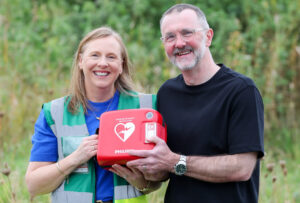
Just minutes away, Nicola Fanning was doing her weekly grocery shopping when her emergency responder app alerted her to a cardiac arrest nearby. A member of Trim Community First Responders, Nicola immediately abandoned her trolley and rushed to the scene. “I just remember grabbing my trolley, shoving it towards a member of staff and saying, ‘There’s an emergency, I’ll be back.'”
When she arrived, gym members had already begun CPR and delivered two shocks using an AED. Nicola took over chest compressions and administered a further three shocks. Eventually, Gordon’s pulse returned. For Nicola, the outcome demonstrated the importance of quick action and community preparedness. “The chain of survival, involving the speed of response, the beginning of CPR and using the AED, made the difference.”
Why Every Minute Matters During Cardiac Arrest
When a cardiac arrest occurs, every second counts. Without immediate CPR, the chances of survival decrease significantly. Starting chest compressions quickly helps maintain blood flow to vital organs until emergency services arrive or an AED can be used.
Gordon’s survival depended on several critical factors working together:
It was a textbook example of how communities can save lives when people know what to do.
A Rare Diagnosis and a Second Chance
Following his recovery, Gordon was diagnosed with cardiac sarcoidosis, a rare inflammatory condition that affects the heart muscle. To protect him from future cardiac events, doctors implanted an Implantable Cardioverter Defibrillator (ICD). In January, that device proved its value when it delivered a life-saving shock during a monitored treadmill exercise session. For Gordon, it reinforced just how close he had come to losing everything. “I got a second chance.”
Turning Survival Into Action
Rather than moving on, Gordon decided to use his experience to help others. As a dedicated member of Trim Celtic AFC, he has since organised CPR training for approximately 50 coaches and assistant coaches at the club. His message is simple: “Please take the time to learn CPR. It only takes a few minutes, but it could be the difference between life and death.”
The Growing Importance of CPR Training in Ireland
Thousands of people experience out-of-hospital cardiac arrests in Ireland every year. Many occur not in public places but in the home, meaning the person most likely to save a life could be a partner, family member, friend or neighbour. The good news is that CPR is a skill anyone can learn.
You don’t need a medical background. You don’t need specialist qualifications. You simply need the confidence to act. As Gordon’s story shows, ordinary people can become extraordinary heroes in a matter of moments.
If Gordon’s experience inspires you to learn CPR, there are excellent resources available across Ireland.
Irish Heart Foundation: The Irish Heart Foundation offers CPR guidance, awareness campaigns and information on training opportunities.
Community First Responders Ireland: Find out more about volunteer first responder groups and how communities can become involved.
Community First Responders – Community First Responders
National Ambulance Service Community Engagement
Information on community first responders and emergency response initiatives.


Ireland international Orla Prendergast is supporting the Irish Heart Foundation after losing her father to heart disease, encouraging people across Ireland to take small steps to protect their heart health.
Read More