
- Support
- Heart
- Stroke
- Keeping Well
- Ways to help
- Schools
- CPR
- About Us
- Search
Healthy Eating
- Back to Main Menu
- Healthy Eating Basics
- Meal Plans and Swaps
- Your Relationship with Food
- Myth Buster
Nurse Helpline
01 6685001
9am – 1pm Mon to Fri
Many people know what a heart-healthy diet looks like, but struggle to stick to it. That’s not a failure. It’s human.
Our eating habits are shaped by stress, emotions, routines, sleep, past dieting and our environment. Understanding why you eat the way you do is often the missing piece when healthy eating feels frustrating or overwhelming.
This page focuses on building a kinder, more sustainable relationship with food – one that supports heart health without guilt or perfection.
Pause and reflect:
If healthy eating has felt hard for you, what do you think gets in the way most?
There’s no wrong answer – noticing the pattern is the first step.
Your body has built-in signals to tell you when it needs food and when it’s had enough. Over time, these signals can become harder to recognise – especially after years of dieting, stress, poor sleep or irregular eating.
Learning to tune in
Noticing hunger and fullness helps you:
Many people find it helpful to think about hunger and fullness on a scale from 1 to 10, where:
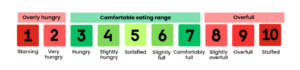
The aim isn’t to eat ‘perfectly’ – it’s to avoid regularly swinging between extremes.
"Using the hunger scale helped me to see that skipping meals and getting to ‘starving’ or ‘very hungry’ made it harder for me to make good choices later in the day.”
“I realised I tend to swing from ‘starving’ to ‘stuffed’. The scale helped me work out that I probably need to eat more regularly.”
Eating in response to emotions is normal – everyone does it sometimes. Stress, boredom, tiredness, anxiety or reward can all trigger eating, even when you’re not physically hungry.
This doesn’t mean you lack willpower. Emotional eating is driven by the brain’s reward system, not hunger hormones.
Helpful questions to ask yourself:
Sometimes food is the right choice. Other times, a different kind of support can help even more.
You might try:
Small changes – like regular meals, better sleep, stress management and non-food coping strategies – often reduce emotional eating naturally.

Mindful eating simply means paying a bit more attention when you eat. It’s a skill you can learn – not a rule to follow perfectly.
Eating more mindfully can help you:
You might try:
Even one mindful meal a day can make a difference.

Fad diets often promise quick results – but they rarely support long-term heart health.
Highly restrictive diets can:
Be cautious of any plan that:
Lasting change doesn’t come from motivation alone. It comes from small habits repeated over time.
Helpful principles include:
You don’t need to change everything at once. One or two manageable changes can improve cholesterol, blood pressure and overall heart health over time.