
- Support
- Heart
- Stroke
- Keeping Well
- Ways to help
- Schools
- CPR
- About Us
- Search


Join the 12 Dips in December Challenge with the Irish Heart Foundation and brave the cold for a cause that warms hearts. Whether it’s the sea, a lake, or even an icy shower – commit to 12 dips this December and help raise vital funds to protect hearts across Ireland and saving lives in your community from heart disease and stroke.
Any questions you can email Jamie, hello@irishheart.ie
Yes, registration is completely free.
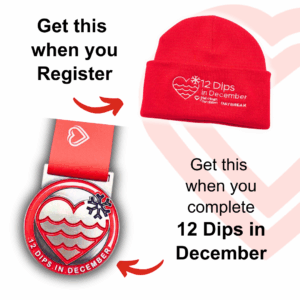
The registration package has your 12 Dips in December Beanie hat for you to wear during the challenge.
When you complete the challenge, we will send you a second pack with your medal.
To complete 12 Dips in December you need to log your Dips on your fundraising page throughout the month.
Your fundraising page is automatically set-up with a target amount of €150, but you can customize your fundraiser to any amount.
The choice is yours.
We know it’s not always easy to make it to open water so you can mix in cold showers, ice baths, and ice buckets.
You don’t have to stick to one type of Dip.
You decide when you want to Dip as well, you can do the 1st of December to the 12th or a throughout the whole month.
The main thing is that you Dip 12 times in December and track it on your fundraiser.
Of course! If you want to set your own swimming goals – Go for it!
You need to log your Dips on your fundraising page.
This is how we will be tracking people’s progress. For all your swims to count, you need to post them to your fundraising page.
We ask you to allow up to 14 days from when you register. If you have registered over 14 days ago and you have not received your Beanie hat, please email us hello@irishheart.ie
This is a large fundraising event, so we thank you for your patience.
Arrive warm, get ready to swim quickly, and do not stand around on shore in your swimming things. Dip in!
Even in cold water, your body can become dehydrated. Drink water before and after your swim to stay properly hydrated.
By getting into the water slowly, and splashing your torso and face before you immerse, you can control your breathing and help prevent more serious reactions.
To help restore your warmth, bring extra, loose, warm layer(s) for your top half, your red Irish Heart Foundation hat, socks and gloves, and a hot drink.
Pro tip: Hot water bottles are the height of winter dipping luxury!
As soon as you get out of the water, focus on getting dressed above anything else.
Lots and lots of small, loose layers without fiddly zips and hooks are recommended. Jeans, tight leggings, and materials like lycra are not your friends after winter dips.
The fastest way to properly warm up after you swim is exercise. A brisk walk after you have fully dressed and recovered, or running on the spot, or jumping jacks will stop the shivering in no time.
Familiarise yourself with the location of nearby lifeguard stations or emergency services. Having a buddy system is also advisable to assist if need and will double the fun.
In cold water, stay relatively close to the shore so you can return to the shore quickly when you are ready to leave.
Know your own limits and listen to advice from officials regarding weather and water conditions.
With repeated exposure to cold, the body adapts and regular swimming can improve fitness and blood pressure in healthy individuals.
Swimming helps keep your joints supple and muscles strong and can help you to lose weight.
However for people with pre-existing heart conditions sudden increases in blood pressure and heart rate can be a problem so individuals with cardiac conditions should always consult their doctor before starting swimming.
Cold water swimming can increase the heart rate and blood pressure and these effects increase the work load on the heart.
For people with pre-existing heart conditions sudden increases in blood pressure and heart rate can be a problem so individuals with cardiac conditions should always consult their doctor before starting swimming.
If you have a pre-existing heart condition its often advised to only swim in water of between 26-28C as this has the least effect on the heart.
Water that is too cold increases the risk of arrhythmias, or if it’s too hot it can decrease the blood pressure making you feel light headed or faint.
Always stop swimming if you feel unwell, have chest pain or palpitations and if symptoms continue seek medical advice.
This is a helpful guide for water safety in open water swimming if you choose to do your 12 Dips in open water – https://rnli.org/safety/choose-your-activity/open-water-swimming